
Winter in Canada subjects homes to enormous strain, and the gutter system is often the first component to fail under the assault of freezing and thawing cycles. Rapid temperature shifts, heavy snow, and built-up ice can quickly overwhelm any channel that has not been properly maintained, leading to dangerous clogs and overflows. When gutters fail, meltwater is misdirected, initiating a cascade of severe and costly damage ranging from destructive ice dams that compromise the roof deck (even modern systems like metal roofing) to hydrostatic pressure exerted on the foundation. Effective seasonal preparation is therefore non-negotiable. This preparation includes necessary debris removal and a final flush, which may involve light power washing, before the temperatures gradually drop. Understanding the critical role of properly functioning gutters provides homeowners with the necessary insight to proactively safeguard the entire structure.
The Mechanism of Failure: When Gutters Clog or Overflow
The primary vulnerability of a gutter system in the lead-up to winter is the presence of residual organic debris from autumn. Leaves, pine needles, small twigs, and even granules shed from asphalt shingles inevitably settle and accumulate within the gutters. During late fall and early winter, minimal daytime melting occurs. This creates small amounts of water that percolate through this debris. When night temperatures plummet, this water freezes. It binds the organic matter into a dense, impenetrable mass that completely blocks the channel. This “clog factor” is the most common cause of winter gutter failure. It effectively renders the entire drainage system useless just when it is needed most.
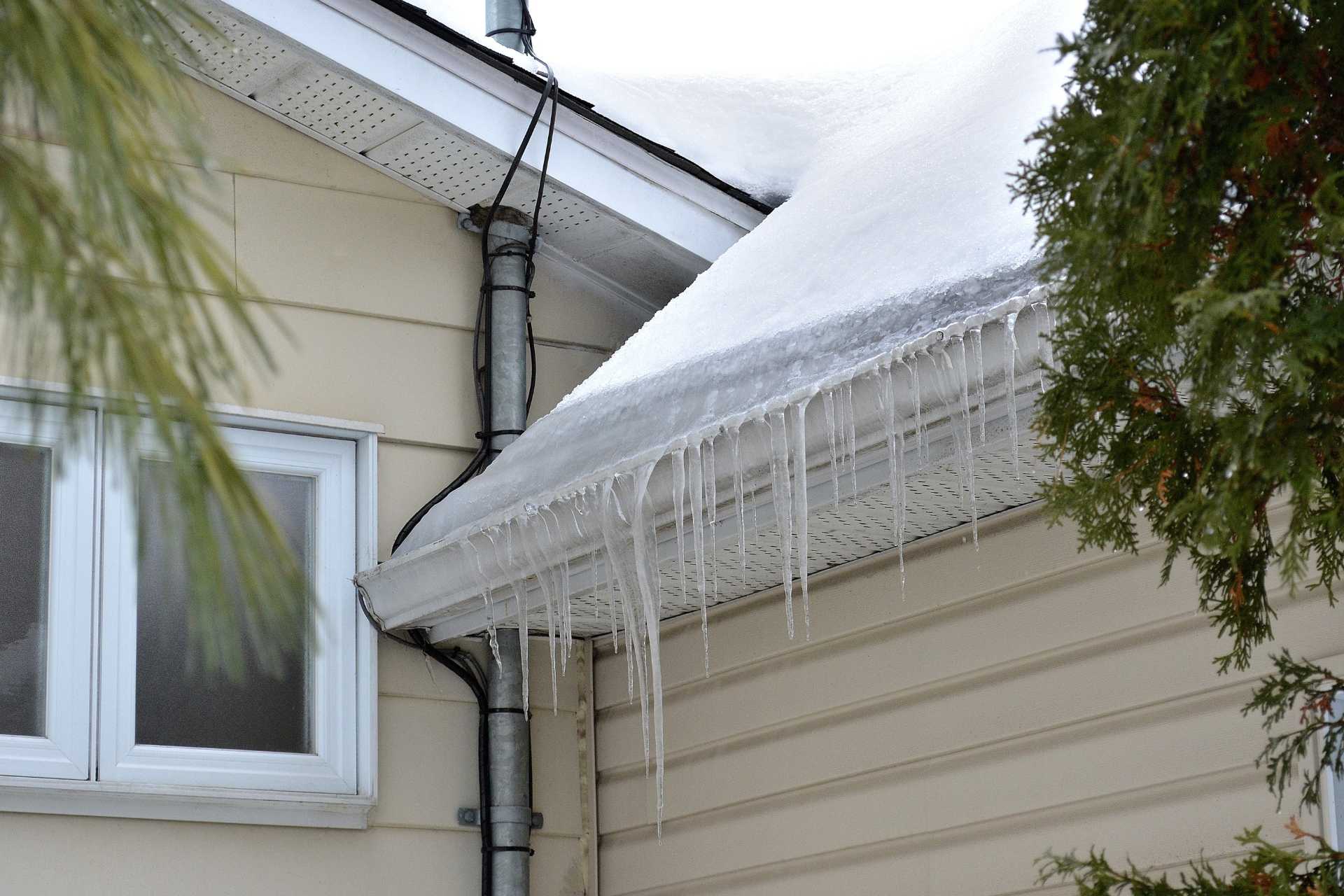
The primary vulnerability of a gutter system leading into winter is residual organic debris from autumn. Leaves, twigs, and granules settle and accumulate within the gutters. Minimal late-fall melting creates water that percolates through this debris. When temperatures drop, this water freezes, binding the organic matter into a dense, impenetrable mass that completely blocks the channel. This “clog factor” is the most common cause of winter gutter failure, rendering drainage useless when needed most. When thaw water hits this frozen clog, it backs up and spills directly over the lip. This misdirected flow cascades down the fascia and siding, causing constant saturation, peeling paint, and water seepage around windows. Furthermore, spilled water refreezes on the exterior walls, forming heavy vertical ice sheets. This places extreme stress on fasteners. Repeated freezing inside the channel can also expand and warp the metal, permanently breaking the seals or pitch and pulling the gutters away from the home.
The Catastrophic Chain Reaction: Damage Caused by Gutter Failure
The most immediate and severe consequence of gutter failure is the formation of destructive ice dams on the roof deck. An ice dam is a thick ice ridge that forms at the unheated roof edge when meltwater, unable to drain through clogged gutters, spills over and instantly refreezes. This rigid barrier traps subsequent meltwater, forcing it backwards and upwards beneath the shingles, bypassing the waterproof barriers. This infiltration directly leaks into the roof deck, attic, and walls. Such water intrusion causes severe structural wood rot, ruins interior drywall, and saturates attic insulation, causing it to lose its essential R-value and drastically increasing winter heating costs. Even homes with efficient systems like metal roofing, which is the best roofing choice for cold weather since it sheds water more efficiently, need clear drainage, as a failed gutter can misdirect this rapid runoff to freeze and cause damage near the drip edge.
The cascading damage extends structurally and aesthetically beyond the roofline down to the foundation. Overflowing gutters saturate the fascia—the board supporting the gutter—and the soffit, leading to rapid deterioration. The cycles of soaking and freezing cause wood rot, cracking, and peeling paint, diminishing the home’s value and requiring costly carpentry repairs. Additionally, heavy ice sheets form vertically along the fascia, placing immense leverage on the gutter hangers, often tearing them from the wood. Crucially, at ground level, clogged downspouts dump all roof runoff directly at the foundation base. This water pools, saturates the soil, and when it refreezes, the expanding ice exerts hydrostatic pressure on the foundation walls. This repeated stress can cause foundation cracks and subsequent basement leaks, making functioning gutters essential to winterize your roof and protect the entire lower structure.
The Solution: Seasonal Maintenance and Preparedness
The proactive solution to mitigating these severe winter risks is thorough seasonal maintenance. This must be performed before the first sustained period of freezing temperatures arrives. The single most important action is to ensure the complete removal of all accumulated debris from the gutters and downspouts. This involves physically clearing the gunk and compacted leaves. This should be followed by a flush test. Using a hose or a specialized cleaning tool, run water through the system. Confirm that the downspouts are entirely clear and that the water flows out rapidly at the base. Even minimal residual debris can act as a nucleus for a deep winter ice block, so diligent cleaning is non-negotiable for winter readiness. This critical maintenance focuses on drainage efficiency. This is often complemented by the addition of snow guards give added protection to your property by managing heavy snow loads and preventing damaging avalanches.
Beyond simple cleaning, a comprehensive inspection of the system’s structural integrity is vital. Gutters must be pitched correctly, sloping slightly (typically about half an inch for every 10 feet of run) toward the downspout outlets. Incorrect or insufficient pitch allows water to stand and pool. This guarantees ice formation even during minor cold snaps. All hangers, brackets, and fascial screws must be checked. Ensure they are securely fastened and can withstand the heavy weight of ice and snow. The joints and end caps should also be inspected for leaks. Finally, and crucially, homeowners must ensure that the downspout extensions are fully functional. They must direct water at least four to six feet away from the foundation. Failure to manage this final step negates all the protective work done up above.
The Small Prep That Saves Big Money
Functional gutters are not merely an afterthought. They are the most critical component of a home’s winter water mitigation strategy. The system is simple, yet its failure initiates a devastating cascade of issues. These range from roof leaks and wood rot to foundation damage. Homeowners take a minor preventative step by performing thorough, proactive cleaning and inspection before the onset of the Canadian winter. This action directly wards off potential major, costly structural repairs. Investing a small amount of time and effort in preparing the gutters now secures the home against the worst ravages of the ice and freeze-thaw cycle. It ensures the structure remains dry and sound from top to bottom.