When you start looking at home improvements, it’s easy to get caught up in the upgrades you can see from the inside. You might be planning a high-end window replacement project to boost your curb appeal and energy efficiency, or perhaps you’re finally finishing that basement. But in the Canadian spring, the most critical upgrades are the ones that protect you from above. As weather patterns become more volatile in 2026, we are seeing a significant rise in sudden, aggressive weather events that go far beyond a simple rain shower. If you haven’t considered how your home would handle severe hailstorms, now is the time to look at metal roofing.
Choosing the right material is about more than just aesthetics; it is about survival. While many people focus on interior comforts, the exterior shell is what keeps your family safe and your interior investments dry. Many industry experts and long-term homeowners agree that metal is the best roofing material for those living in high-impact zones. It provides a level of structural integrity and impact resistance that traditional shingles simply cannot match. By investing in your home’s envelope now, you ensure that when a storm hits, your focus remains on your family’s safety rather than whether your ceiling is about to start dripping.
The Quick Edit: Key Takeaways
- Impact Superiority: Metal systems carry a Class 4 impact rating, meaning they can withstand high-velocity hail that would normally shatter or puncture asphalt shingles.
- The Noise Myth: When properly installed with modern underlayment and attic insulation, you won’t notice the noise metal roofing makes when it rains or hails any more than you would with a traditional roof.
- Investment Security: By choosing a roofing system that lasts 50 or more years, you are essentially buying an insurance policy against future climate unpredictability.
Debunking the Sound Myth: What You Actually Hear
One of the most common questions people ask when they are considering an upgrade is about the noise metal roofing makes when it rains or hails. There is a lingering myth—often fueled by memories of old, uninsulated sheds or barns—that sitting under a metal roof during a storm is like being inside a giant tin drum. To a friend, the “real talk” is this: that simply isn’t the reality of modern residential construction.
In a modern home, your roof isn’t just a sheet of metal. It is part of a complex, multi-layered assembly. Because your home has a solid wood roof deck, high-quality waterproof underlayment, and a thick layer of attic insulation, the sound of a storm is dampened almost entirely before it ever reaches your ears. In many cases, homeowners find that the sound of rain is actually quieter than it was with asphalt because the metal panels are so securely fastened and don’t “vibrate” the way loose shingles might. Whether it’s a light spring shower or a heavy downpour, you aren’t going to be kept awake by the “clanging” of rain. This silence is a hallmark of a high-quality installation and is one of the reasons why more Canadians are concluding that metal is the best roofing material for both acoustic comfort and physical protection.
The Hidden Dangers of “Bruised” Shingles
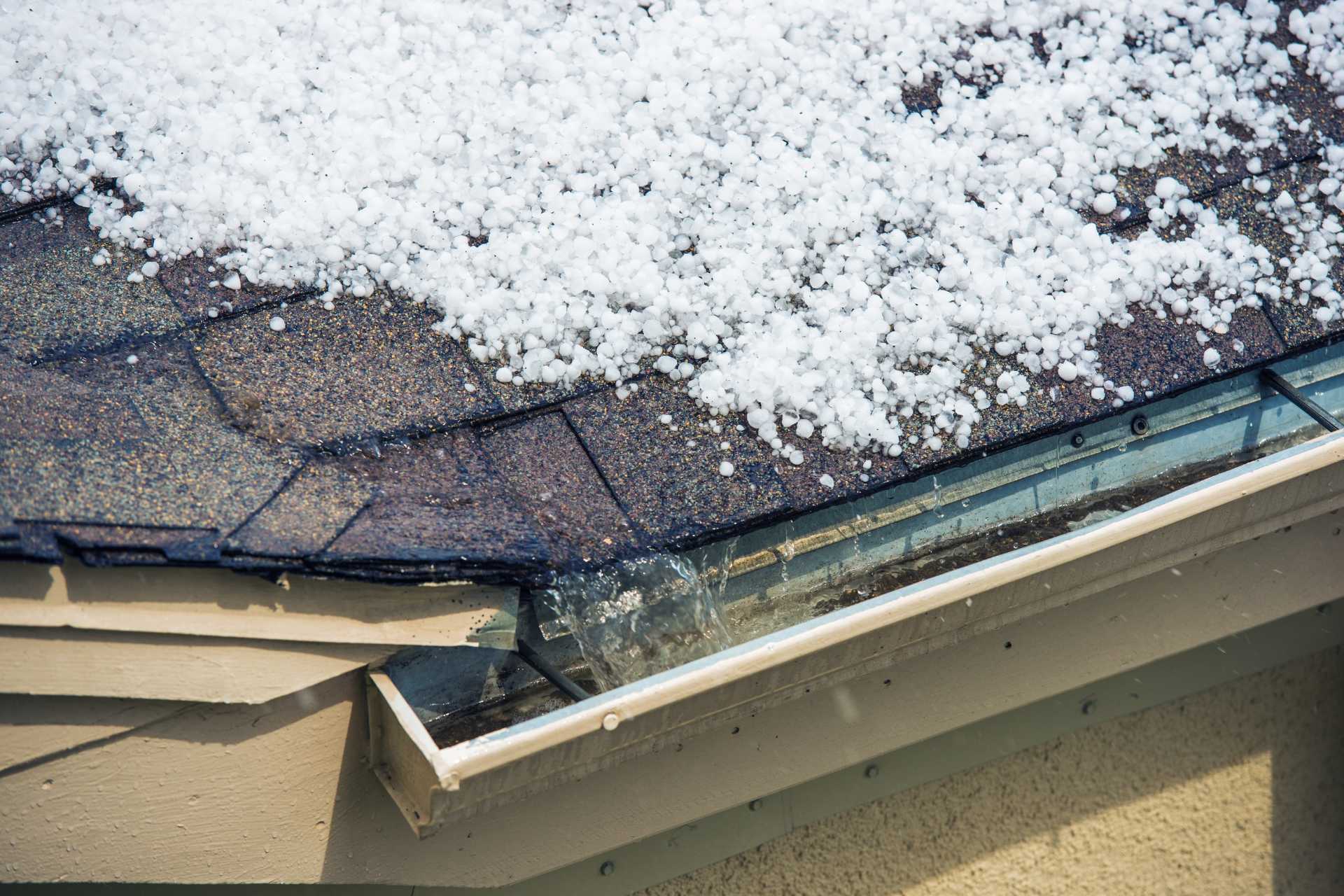
After the clouds clear and the sun comes back out, it’s easy to assume your home made it through the storm unscathed. However, this is exactly when many homeowners fall into a dangerous trap. Traditional shingles suffer from what we call “bruising.” Even if the hail didn’t create a visible hole that you can see from the ground, the impact knocks off the protective granules that shield the asphalt from the sun’s UV rays.
Once those granules are gone, the underlying asphalt mat is exposed. Within a few months, those “bruises” will crack, become brittle, and eventually lead to mystery leaks. This is why you should always have your roofing inspected after any significant weather event. While you might not see the damage from the driveway, a professional can spot the early signs of failure before they turn into an emergency.
If you are tired of the “storm anxiety” that comes with every dark cloud on the horizon, transitioning to a system with a 50+ year metal roof lifespan is the ultimate solution. Metal doesn’t “bruise” or lose granules. It is a solid, consistent barrier that maintains its structural thickness and integrity year after year. By removing the “weakest link” from your home’s defence, you ensure that your structural wood and insulation stay dry for the long haul.
The Commercial Perspective: Strength at Scale
The need for impact resistance isn’t limited to residential neighbourhoods. If you manage an industrial site or an office complex, the stakes are even higher. A flat roof failure after a storm is a nightmare. It creates logistical and financial hurdles that can shut down operations for weeks.
This is why more developers are opting for a sloped roof for a commercial building. They are moving away from traditional flat membranes. When hail hits a flat surface, the energy goes straight down. This often punctures the membrane. On a sloped metal surface, the angle helps deflect the impact. It acts much like a shield.
A sloped design also handles the aftermath better. Once the hail melts, water is immediately funnelled off the structure. It doesn’t pool on top or search for a way inside. Whether you are protecting a warehouse or a home office, the physics are the same. Slope plus metal equals security. You aren’t just covering a building. You are ensuring your business stays operational regardless of the weather.
Strategic Preparation for the Year Ahead
Preparing for the rainy season in 2026 requires a shift in how we think about home maintenance. In the past, roofing was something you dealt with only when it failed. Today, with the increasing frequency of high-energy storms and heavy precipitation, waiting for a failure is a high-risk strategy. By the time you notice a leak on your ceiling, the water has likely already compromised your attic insulation, fostered mould growth, and potentially damaged your electrical systems.
Proactive homeowners are realizing that metal is the best roofing material for minimizing these long-term risks. It isn’t just about surviving the next twenty minutes of a hailstorm. It’s about ensuring that your home’s “envelope” remains impenetrable for the next five decades. By taking the time to have your roofing inspected now, before the peak of the storm season, you can identify if your current system is a liability. Making the switch to a permanent material means that you can finally stop “hoping” your roof holds up and start knowing that it will.
The Last Roof You’ll Ever Buy
Look at the total cost of homeownership over several decades. The choice becomes clear. You can continue repairing and replacing temporary materials every fifteen years. This means facing the stress of every storm in between. Alternatively, you can invest in a roof that lasts up to 70 years.
The weather is becoming less predictable. Having a “set it and forget it” solution is the ultimate luxury. You may have started the year thinking about a window replacement or other aesthetic upgrades. However, remember that the roof is the foundation of your home’s safety. It protects your family, your furniture, and your peace of mind.
Choose a material that doesn’t shatter under pressure or rot in the rain. By doing so, you build a legacy of resilience for your property. Don’t wait for the next siren to sound. Take control of your home’s defence today. Ensure that the only thing you have to do during a storm is sit back and listen to the rain.