
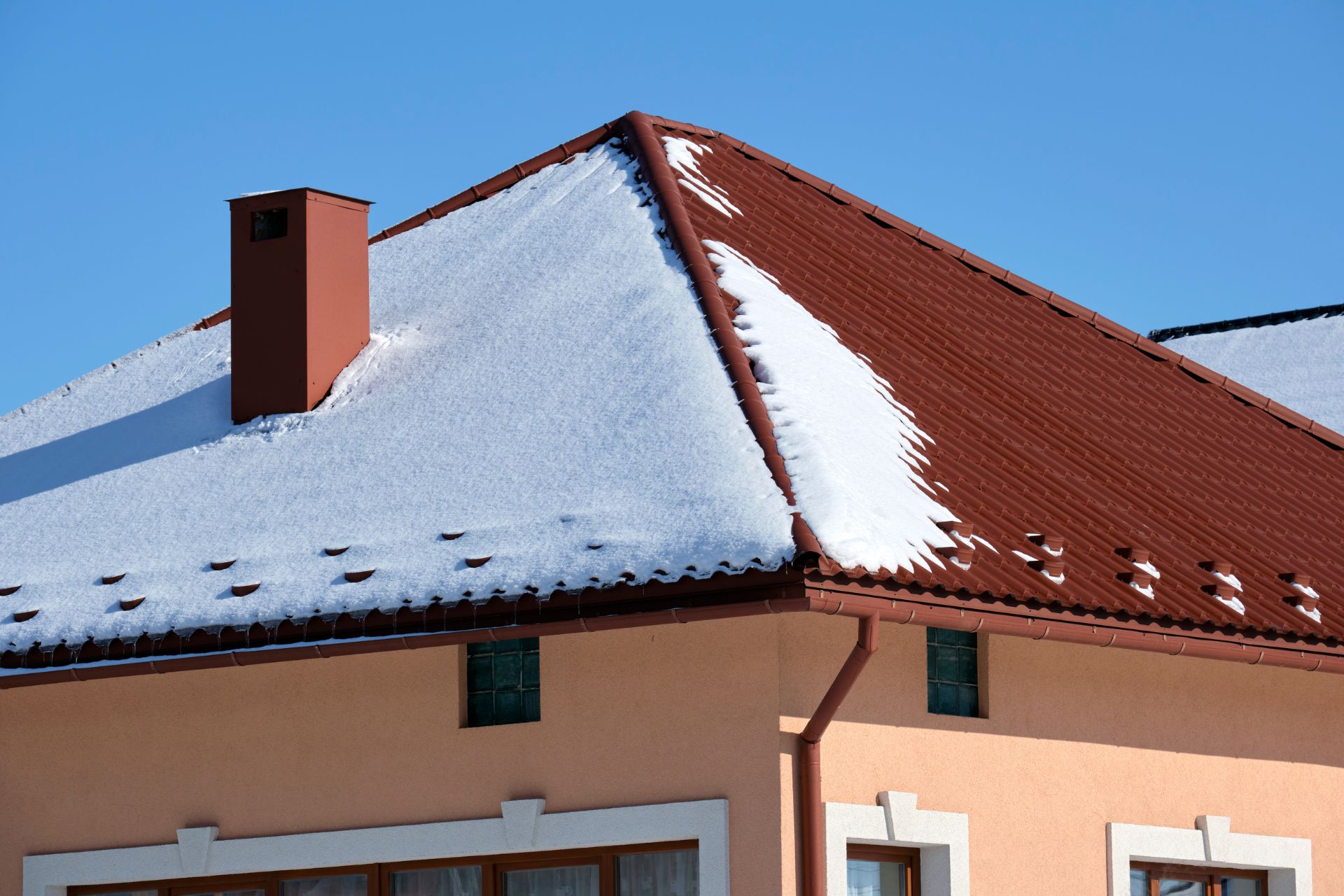
Metal roofing is built to handle Canada’s toughest winters, but its excellent snow-shedding feature can create a new hazard: sudden snow slides. When large sheets of ice and snow break free, they can damage gutters, block pathways, and pose a serious safety risk. The solution is snow guards, small but powerful devices that hold snow in place, allowing it to melt gradually. This controlled melt is critical not just for roof-level safety, but also for protecting the home’s foundation. It prevents massive snow dumps from over-saturating the ground, which can cause hydrostatic pressure, leaks, and the need for costly basement underpinning. Understanding how snow guards work is essential, as they are a key component in protecting the long-term health, safety, and stability of the entire property.
What Are Snow Guards?
Snow guards are specialized devices installed on a roof in a precise pattern. Their purpose is simple but critical — to prevent a “snow avalanche,” the sudden and dangerous release of a large, heavy sheet of snow and ice. Instead of allowing the entire snowpack to slide off at once, they create friction, holding the snow in place. This allows it to melt and break apart in a controlled, gradual manner. Snow guards are an essential safety and property protection feature for many roofing systems.
There are three main types of snow guard systems. Pad-style guards are small, individual units made from clear polycarbonate or colour-matched metal. They’re installed in a staggered pattern and are popular for homes because they blend in aesthetically. Pipe-style guards, also known as rail guards, are a heavier-duty option. They use brackets to hold long pipes horizontally across the roof, forming a strong, continuous barrier. Fence-style guards work similarly but have a more decorative appearance. The ideal system depends on the roof’s slope, size, and the typical snow load in the region.
Why Metal Roofs Need Snow Guards
The main difference between metal and asphalt roofing comes down to friction. Asphalt shingles have a gritty, textured surface that naturally grips snow and holds it in place. Metal roofing, on the other hand, is smooth and low-friction by design. This feature helps the roof shed dirt, leaves, and light snow with ease. The problem starts during a freeze-thaw cycle. As temperatures fluctuate, a thin layer of water forms between the roof and the snowpack above. This meltwater works like a lubricant, reducing friction. When enough weight builds up, the entire slab of snow — sometimes weighing hundreds or even thousands of pounds — can suddenly break free.
This “snow avalanche” creates two major risks. The first is property damage. The force of the slide can rip eavestroughs and gutters off the fascia, crush landscaping, or damage vehicles parked below. The second, and more serious risk, is safety. A sudden, heavy slide can block exits, pile up on walkways, or cause serious injury to anyone underneath. Snow guards solve this problem by controlling how snow releases from the roof, turning a potential hazard into a predictable, manageable process.
How Snow Guards Work
Snow guards do not stop snow from leaving the roof; they manage how it leaves. They are engineered to “grip” the snowpack, holding it in place and distributing its weight evenly across the entire roof structure. This prevents the snow from moving as one unified, dangerous slab. By holding the snow on the roof, the system allows the snowpack to melt gradually, either from the sun above or from the small amount of heat rising from the home’s attic below.
This process turns a sudden, catastrophic “dump” of snow into a slow, harmless “drip” of meltwater. This is why installation is an engineered science, not a random placement. A professional installer must calculate the roof’s pitch, local snow-load data, and the type of metal panel to determine the exact spacing and layout required. An improperly spaced system will fail under load. Correct installation is critical for ensuring the snow guards perform safely and effectively.
Benefits of Installing Snow Guards on Metal Roofing
The primary benefit of snow guards is safety. They protect family, guests, and pets from the risk of falling ice and snow, particularly in high-traffic zones like the front door, garage, and walkways. The secondary benefit is financial: property protection. These devices are “gutter insurance.” The cost of installing snow guards is a tiny fraction of the cost of replacing an entire eavestrough system, repairing a crushed deck, or replacing damaged landscaping.
A crucial, often-overlooked benefit is foundation stability. A sudden avalanche dumps a massive amount of snow directly against the home’s foundation. This one event can cause a “flash melt,” super-saturating the soil in a very short time. This saturation creates intense hydrostatic pressure on basement walls, which can lead to cracks, leaks, and the kind of long-term structural failures that require costly basement underpinning. By turning the “dump” into a “drip,” snow guards allow the home’s drainage system to manage the water, protecting the foundation.
When and Where to Install Snow Guards
The ideal time to install snow guards is during the initial metal roofing installation. This is the most cost-effective approach, as it allows the guards to be integrated seamlessly and securely by the roofing crew. Factoring them into the initial plan may slightly affect the cost of your metal roof, but it is far more economical than a separate retrofitting job later. However, if a metal roof is already installed, snow guards can and should be retrofitted at any time to enhance safety.
Placement is strategic, not random. Snow guards are not always required for the entire roof surface. The priority is to install them over “high-risk” zones. These critical areas include: above all entryways (front doors, back doors, patio doors), over garage doors and driveways, above walkways and paths, over decks and patios, and above any lower roof sections or roof overhangs that protect your home from weather damage, as these can be crushed by snow falling from a higher roof.
Complementary Winter Roofing Solutions
Snow guards are a key player, but they work best as part of a complete winter-proof system. When it is time to winterize your roof, this holistic approach is essential. A well-insulated and properly ventilated attic is the first step. This keeps the roof surface cold, preventing the freeze-thaw cycles that create ice dams at the eaves and which contribute to dangerous snow slides. A “cold roof” is a healthy roof in a Canadian winter.
This system’s “exit plan” is just as important. The gradual meltwater produced by the snow guards needs somewhere to go. Clean, functional gutters and downspouts are the “exit ramps” that channel this water safely away. The final step is proper grading at ground level, ensuring all water from the downspouts is directed far away from the foundation. This prevents the soil saturation that can lead to basement leaks and, in severe cases, the need for basement underpinning.
An Avalanche of Good Sense: Why Snow Guards Are a Smart Finish
A metal roofing system provides unmatched endurance and longevity against the elements. Adding snow guards provides a vital, non-negotiable layer of safety, control, and peace of mind. It is the “finishing touch” that transforms a high-performance roof into a truly safe and complete system. This small addition protects the investment in the roof, the gutters, the landscaping, and the foundation itself.
Homeowners should protect their investment and their family. Contact a professional roofing company to discuss a complete home safety strategy. A certified expert can recommend a properly engineered snow guard system tailored to the roof’s design. They can also assess the home’s overall stability — from the condition of the roof above to the strength and health of the foundation below.