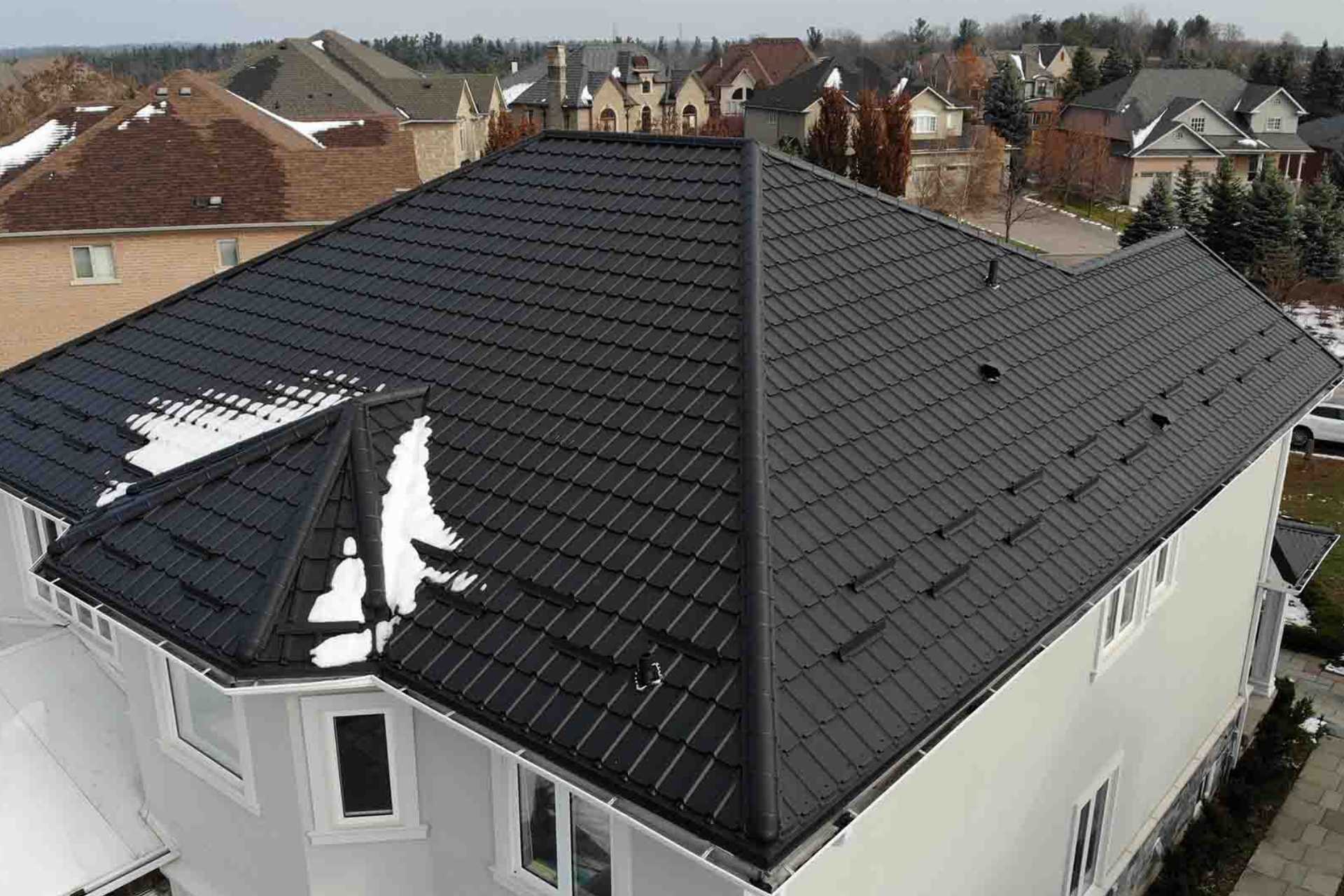
In 2026, the evolution of metal roofing technology has redefined the roof as a dynamic moisture-management system rather than a static lid. While homeowners often prioritize a window replacement to seal the home’s perimeter, the roof remains the most critical “breathing” component of the building envelope, particularly when fighting internal humidity and attic condensation. While myths suggest metal surfaces cause “sweating,” modern metal roofing is actually the premier defence against “attic rain” in the volatile Canadian climate. By integrating the Rainscreen Principle and vapour-permeable roof underlayment, these systems create a controlled thermal transition that keeps structural wood dry. This “Breathing Shield” approach ensures moisture is whisked away via convective airflow to protect the home’s envelope and comfort for decades.
The Science of the “Dew Point” in Canadian Attics
Condensation is a physics problem, not a material flaw. In a typical home, interior activities like cooking and showering release gallons of water vapour daily. Because warm air rises, this moisture migrates toward the attic. When this humid air hits a cold surface, it reaches its “dew point”—the temperature where air can no longer hold vapour, causing it to liquefy into droplets.
The misconception that metal roofs “sweat” arises here. If a metal panel is cold and the attic air is warm, water forms on the underside. However, the metal is the catalyst, not the source. In asphalt roofs, this moisture is often absorbed into the wooden deck, causing hidden rot. Because metal is non-porous, the moisture is visible, allowing for early intervention. A properly engineered system ensures the dew point occurs where moisture can be safely exhausted before it touches the structure.
Managing Condensation Beneath Metal Roofing Panels
The primary defence against attic condensation is the “Cold Roof” strategy. The goal is to maintain an attic temperature equal to the outdoors, ensuring humid air from the living space does not hit a cold surface prematurely. Modern metal systems achieve this through superior ventilation geometry, allowing a continuous flow of air from soffits to the ridge to stabilize the attic environment.
Furthermore, panels are installed with a thermal break. This prevents “thermal bridging,” where cold from the metal surface is conducted into the wooden deck. By using specialized clips or furring strips to decouple the metal skin from the house, the roof deck stays warm enough to prevent liquid water formation. This virtually eliminates the risk of “attic rain,” where frost on the underside of the roof melts and drips into the insulation, compromising the home’s framing and thermal efficiency.
High-Performance Substrates and Airflow
Beneath the metal panels lies the most critical invisible component of the assembly. Historically, heavy felt paper acted as a vapour barrier, trapping moisture inside the wood. Modern 2026 membranes are vapour-permeable, meaning they are watertight from the outside but allow vapour to pass through from the inside. This allows the wooden roof deck to “exhale” moisture trapped during construction or from interior leaks.
This breathability prevents the “mummification” of rot. If moisture enters the wood, a permeable barrier allows it to escape as vapour into the ventilation gap, where it is carried away. This hygroscopic management is a pillar of modern building science. Rather than sealing the house in a plastic bag, we create a sophisticated filter that keeps liquid water out while allowing the structure to dry naturally. This distinction ensures the roof protects the home for a 50-year lifespan rather than a standard 15-year cycle.
The Rainscreen Principle: The Gold Standard for Deck Protection
The most advanced condensation prevention involves the Rainscreen Principle. This creates a dedicated 19mm to 38mm air gap between the metal panels and the roof deck using a system of battens. This gap serves as both a drainage plane and a ventilation channel. If micro-amounts of condensation form on the metal’s underside, they roll down the roof underlayment and exit the system without ever touching the structural wood.
This air gap triggers a “chimney effect.” As solar energy heats the metal, the air in the gap rises and escapes through the ridge, pulling cooler, drier air from the bottom. This constant convective airflow is the ultimate enemy of moisture, ensuring the space beneath the panels is “wind-dried.” This prevents stagnant, humid conditions that foster mould growth and helps to prevent ice buildup on the roof. By maintaining uniform surface temperatures, we stop the melt-and-freeze cycle that creates dangerous ice dams at the eaves.
Solar Performance and the Emissivity Factor
Moisture management is also tied to thermal regulation. A material’s ability to shed absorbed heat is a primary driver of attic health. A roof that sheds heat quickly returns to ambient temperatures faster after sunset. This prevents the “thermal battery” effect where a hot roof warms the attic air late into the night. When the attic stays cooler, the risk of moisture-laden air reaching its dew point against the roof deck is significantly reduced.
Advanced coatings are standard in 2026 metal systems. These are engineered to “bleed off” infrared energy into the atmosphere, maintaining a stable temperature gradient across the assembly. When temperatures remain stable, air movement within ventilation gaps remains predictable. This thermodynamic stability is why metal roofs outperform asphalt in complex Canadian climates. They actively regulate the home’s humidity levels 24 hours a day rather than acting as a passive heat sink.
Engineering Vulnerable Points: Valleys and Joints
While the main roof planes are easily ventilated, certain junctions require forensic engineering. Valleys are the primary leak point on any roof shape because they manage the highest volume of water and snow. In a metal system, valleys are open channels, allowing for the rapid shedding of debris and ice. In contrast, traditional asphalt valleys are often “closed” or woven, creating traps for moisture and ice that lead to wood rot.
A metal valley allows for “thermal shimmy,” letting panels expand and contract without breaking water seals. Because valleys are high-flow areas, they are high-risk for condensation. Proper engineering ensures the waterproofing in these zones is extra-thick and self-healing, protecting the deck even during heavy spring thaws. By treating the valley as a high-performance hydraulic channel, we eliminate the most common failure points found in residential roofing.
The Sustainability Cycle: Recyclability and the Future
Metal roofing is an ethical choice as much as a structural one. Most 2026 systems are manufactured from 95% recycled content and can be 100% recycled again. This circular economy is a cornerstone of modern building standards. Choosing metal rejects the “disposable” culture of asphalt shingles, which contribute billions of pounds to Canadian landfills annually. Metal is a permanent asset reclaimed at the end of its 50-year life.
This longevity is the ultimate moisture protection. A roof that does not require replacement every decade avoids subjecting the interior to the risks of exposure during tear-offs. The environmental benefits—from recycled origins to high-performance coatings—make it the most responsible choice for the 2026 homeowner. It is a “closed-loop” system that protects the budget and the planet. In an era of weather volatility, this level of permanence provides the ultimate peace of mind.
Securing the Building Envelope for the Future
Ultimately, a metal roofing system is a sophisticated moisture-management tool that turns potential condensation hazards into a resilient, breathable barrier. By integrating the Rainscreen Principle with vapour-permeable membranes, homeowners can prevent snow and ice buildup on the roof and ensure their attic remains dry. Because these systems have high recyclability, they offer a sustainable solution that eliminates the waste of traditional asphalt. This commitment to a high-performance envelope utilizes the high thermal emissivity of metal roofing systems to protect structural integrity, providing a permanent solution that respects both thermodynamics and property value.