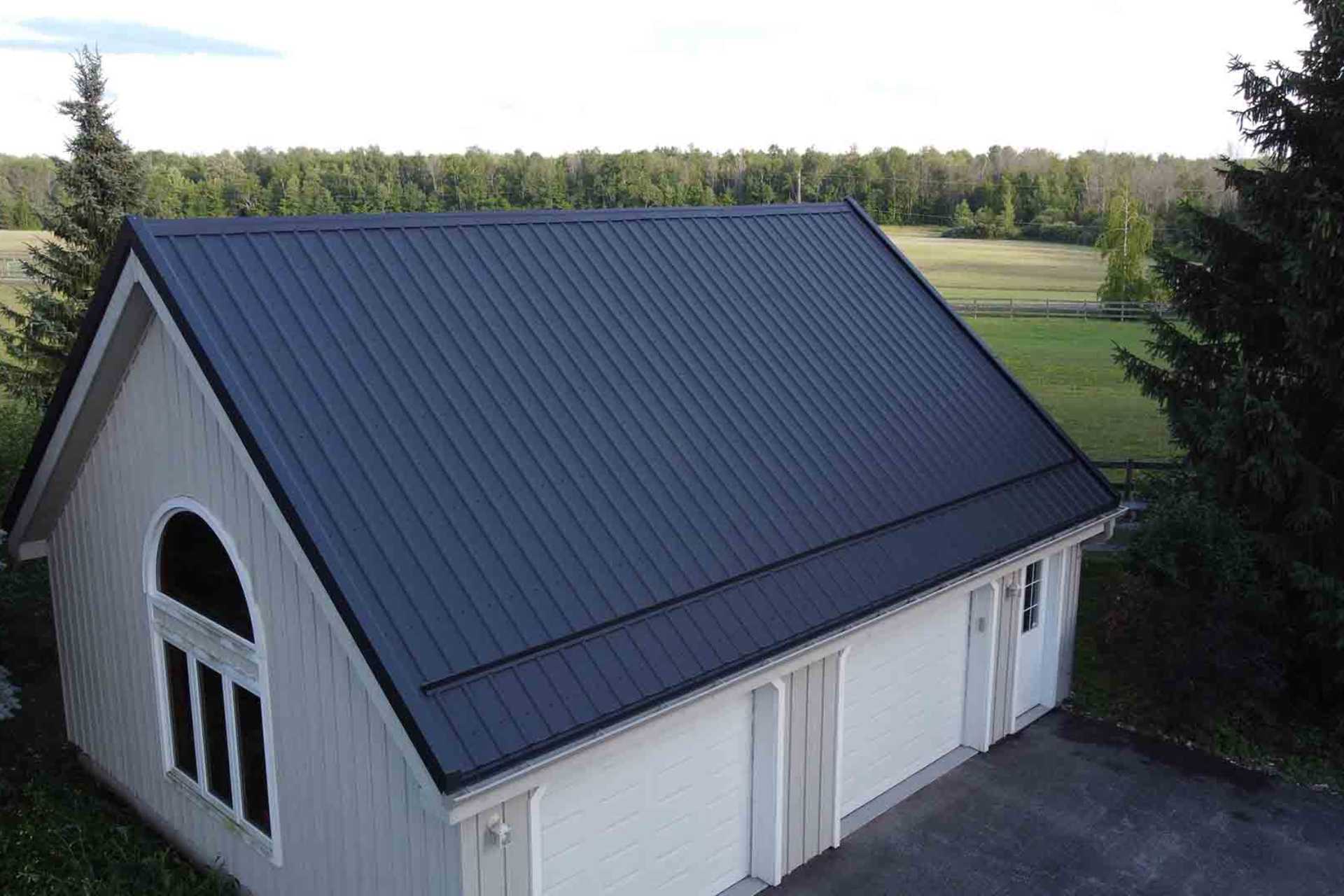
For decades, residential metal was often associated with the high-gloss, “agricultural” look of rural outbuildings. In 2026, the trend has flipped entirely. Across Canada, the shift toward understated elegance is redefining curb appeal. Modern homeowners are moving away from reflective surfaces in favour of the sophisticated, velvety depth provided by matte finishes.
This shift is part of a larger “quiet luxury” movement in architecture. While many homeowners prioritize a window replacement as the primary way to modernize a facade, a custom home builder in 2026 will tell you that metal roofing is now the dominant factor in defining a property’s character. It is no longer just a utility; it is the crowning design element of the modern home.
The Science of the “Soft Look”
What makes a matte finish fundamentally different from the glossy roofs of the past? The secret lies in advanced pigment technology. Traditional gloss coatings reflect light in a single direction, which can create a harsh glare and highlight “oil canning”—the subtle waviness sometimes seen in flat metal panels.
Matte finishes are engineered to diffuse light. By scattering rays in multiple directions, these coatings provide a consistent, rich colour that remains stable regardless of the sun’s angle. This diffusion allows the roof to mimic high-end natural materials like zinc, lead-coated copper, or slate. Because of this versatility, architects increasingly agree that metal roofing is an architectural statement piece. It provides the prestigious look of natural stone without the high maintenance or the massive structural weight.
The 2026 Design Palette: Deep, Earthy, and Muted
The colour trends for 2026 reflect a desire for homes to harmonize with the Canadian landscape rather than compete with it. We are seeing a surge in “Iron Ore,” “Burnished Slate,” and deep charcoal blacks. These tones provide a striking contrast against light-colored siding or natural wood accents.
The visual impact of these colours is enhanced by the matte texture. A matte charcoal roof can look like a soft grey in the morning mist and shift to a deep, inky black under a clear afternoon sky. Choosing the right metal roofing style in 2026 is about more than just picking a colour. It is about selecting a finish that adds depth and movement to the home’s exterior profile. For many, this involves moving toward RAL-certified shades like Graphite Grey or Mocha Brown, which provide a neutral yet powerful anchor for the rest of the home’s exterior materials.
Performance: Substance Behind the Style
While the primary draw of matte is aesthetic, the performance benefits are equally impressive. In the past, dark roofs were notorious for absorbing heat. However, 2026 technology has introduced reflective metal roof coatings that achieve high energy efficiency even in dark, matte shades. These “cool roof” pigments reflect infrared light, keeping attics significantly cooler during the humid Ontario or BC summers without requiring a bright white finish. Modern matte coatings are now capable of achieving a high Solar Reflectance Index (SRI), meaning they reject solar heat as effectively as much lighter-colored traditional materials.
There is also a practical maintenance advantage to the matte trend. A spring thaw roof inspection often reveals that matte finishes are much more forgiving than their glossy counterparts. Glossy roofs tend to show every streak of dried pollen and every layer of spring dust. Matte surfaces, with their textured light diffusion, hide this seasonal debris, keeping the home looking pristine between cleanings. Furthermore, matte finishes are excellent at masking “scuffing” or minor handling marks that can occur during the freeze-thaw cycles of a Canadian winter.
From a structural standpoint, metal roofing is safer for older homes because it allows owners of heritage properties to achieve the “heavy” look of traditional slate or clay tile while actually reducing the load on the original rafters. You get the 2026 “custom” look without the structural risk of real stone. By using a lightweight metal panel with a matte, slate-like finish, a century-old home can be modernized without requiring expensive structural reinforcement of the attic joists.
Beyond weight, this switch also improves the home’s atmospheric resilience. While some homeowners worry that a metallic surface might attract lightning, the material is actually a safety asset; its non-combustible nature ensures that if a strike does occur, the energy is dissipated across the matte surface rather than igniting the ancient timber of a heritage attic.
Hiding the “Waviness” Factor
One of the most practical reasons architects choose matte in 2026 is to combat “oil canning.” This is a natural phenomenon where flat metal panels appear to have slight ripples or waves due to thermal expansion or structural shifting. On a high-gloss roof, these ripples act like mirrors, reflecting sunlight in distorted patterns that can look like a defect.
Matte finishes solve this by breaking up the light. Because the surface isn’t mirroring the sky, the eye doesn’t catch those subtle surface variations. This makes for a much “cleaner” look across large, flat roof planes. It is this combination of solving a technical visual problem while delivering a high-end aesthetic that has made matte the go-to for custom home builds from the Muskokas to the Rockies.
The Risk of Quality vs. Appearance
As matte finishes grow in popularity, the market has seen an influx of lower-quality coatings. It is important to distinguish between premium PVDF (Kynar 500) matte finishes and cheaper polyester alternatives. Low-quality matte paints are prone to “chalking”—a process where the resin breaks down into a white, powdery film under UV exposure. This can cause the roof to look faded and patchy within just a few years.
A real estate agent will confirm that curb appeal is the first thing an appraiser or potential buyer sees. A roof that has chalked or faded unevenly can negatively impact a home’s valuation during a refinance or sale. High-quality matte coatings in 2026 are specifically engineered to resist this chalking, maintaining their “velvet” look for decades. When investing in a matte roof, the warranty on color retention and chalk resistance is just as important as the structural warranty of the metal itself.
The New Standard of Luxury
Matte isn’t just a temporary trend; it is the new benchmark for the high-end Canadian home. By diffusing light and embracing a muted, natural palette, matte metal roofing bridges the gap between industrial durability and residential warmth. It allows a home to feel anchored and permanent, rather than shiny and new.
As we look toward the rest of 2026, the verdict is clear: style and substance are no longer mutually exclusive. Homeowners are finally realizing that they can have a roof that is as tough as steel but as soft as silk to the eye. It is the ultimate upgrade for those who want their home to stand out by blending in beautifully. Investing in a matte metal roof is an investment in a “future-proof” aesthetic that will look as modern in 2056 as it does today.