
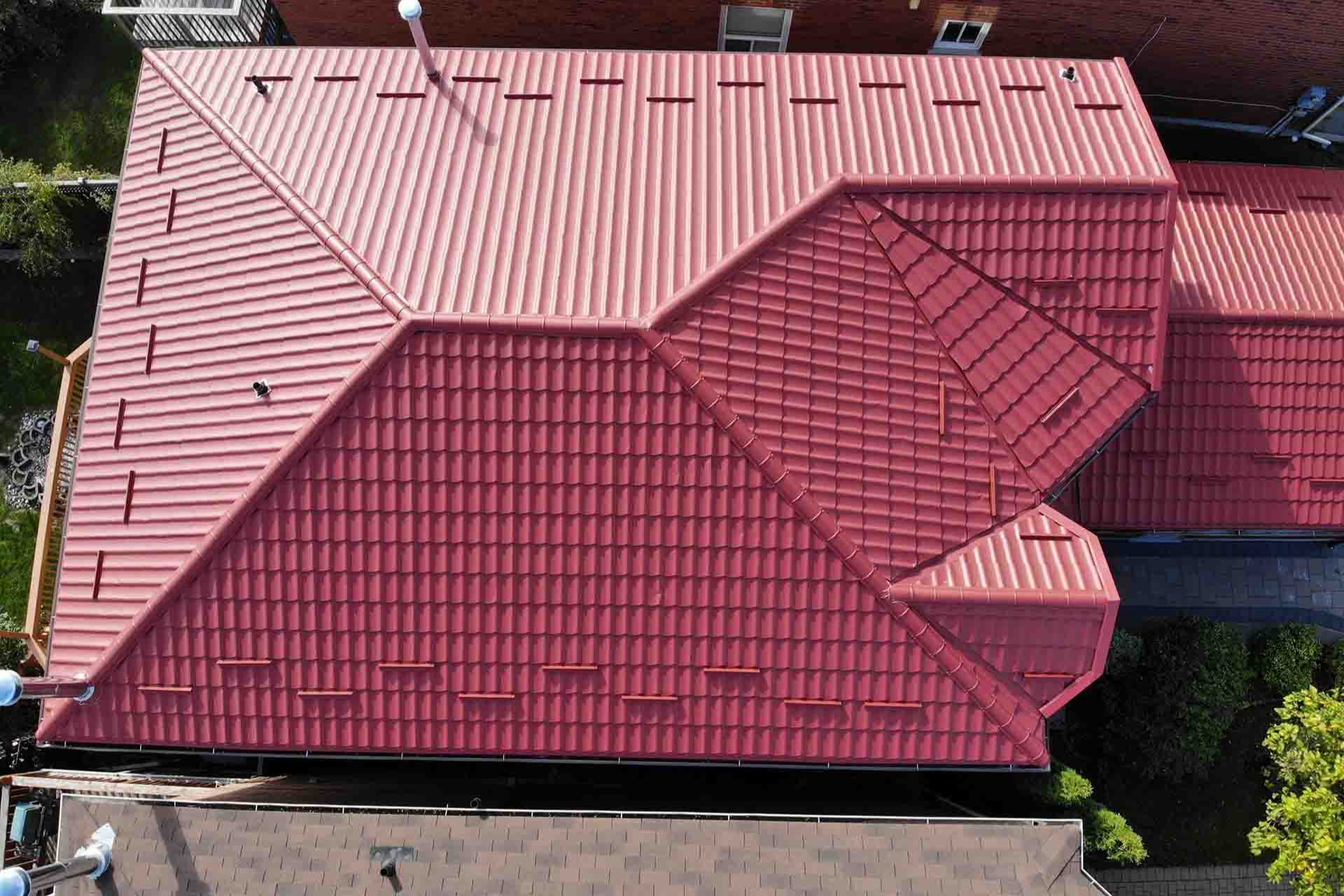
Modern architectural trends often favour complex rooflines with multiple gables and dormers, yet these aesthetic choices significantly increase the hydraulic pressure on the building envelope. While many homeowners understand the necessity of seasonal maintenance, like catch basin cleaning to manage ground-level water, the most intense moisture management occurs at the roof’s internal intersections. Metal roofing has emerged as the premier solution for these high-stress zones because it transforms the “valley”—the primary failure point of traditional materials—into a precision-engineered drainage channel. By moving away from the “disposable” logic of temporary covers, a well-constructed valley ensures that the concentrated flow of rain and snow is shed efficiently, protecting the home’s structural core from the silent threat of water ingress and long-term decay.
The Hydraulic Load: Understanding the “Firehose Effect”
A roof valley is not merely a joint; it is a high-volume drainage channel. To understand the physics, consider how different roof shapes handle rainwater and drainage differently. On a standard gable roof, water flows in a straight line toward the eaves. In a valley, however, two large surface areas concentrate their entire runoff into a single, narrow trough. During a heavy downpour, this creates a “firehose effect.” The water volume in the valley can be ten times greater than the volume on the main panels.
This hydraulic load becomes even more dangerous during the spring thaw. As snow melts on the upper slopes, it slides into the valley, where it can compress into a dense “slush dam.” If the valley is not engineered to shed this weight quickly, water can back up under the roofing material. This is why the valley remains the primary failure point for traditional materials. A high-performance system must be designed to manage this concentrated energy without allowing a single drop of water to penetrate the substrate.
Open vs. Closed Valleys: A Comparative Analysis
When choosing between flat roofs and sloped roofs, the management of intersections is a top priority for designers. In sloped roofing, there are two primary ways to treat a valley: open or closed. A “closed” valley is common in asphalt shingle installations. The shingles are woven together or overlapped across the joint to hide the valley flashing. While this looks uniform, it creates a friction-heavy surface. This texture traps leaves, pine needles, and grit, which eventually slow down water flow and lead to premature rot.
An “open” valley is the gold standard for metal systems. In this design, a pre-formed metal liner—often with a “W” or “I” profile—is installed in the trough. The roof panels are then trimmed back to leave the metal channel exposed. This creates a smooth, slick path for water and debris to exit the roof. The “W” profile includes a center diverter rib. This rib prevents high-velocity water from one slope from rushing across the valley and forcing its way under the panels on the opposite side. This mechanical diversion is essential for long-term waterproof integrity.
The Multi-Layer Defence: Below the Metal
The visible metal is only the first line of defence. True security in the valley comes from the layers beneath. Before the metal valley flashing is installed, a high-temperature, self-healing ice and water shield must be applied. This membrane seals around any fasteners that penetrate the deck. It provides a secondary waterproof barrier that remains flexible even in sub-zero temperatures. This layer is critical because it handles the “micro-moisture” that can occur from wind-driven rain.
Precision is also required when securing the roof flashing in these high-stress zones. Unlike main panels, valley liners must allow for significant thermal movement. Metal expands and contracts as temperatures shift. If the valley is “pinned” too tightly with nails, the metal will buckle and “oil can” over time. Professional installers use expansion clips that hold the metal securely while allowing it to slide microscopically. This prevents the fasteners from backing out or tearing the underlying waterproof membrane during extreme seasonal shifts.
Solving the Hidden Threat: Attic Condensation
Proper valley engineering also plays a role in the overall health of the home’s interior. Attic condensation is a frequent byproduct of poor roof design. When a valley leaks or holds moisture, the wooden roof deck stays damp. This dampness cools the attic air locally, creating a “cold spot” where interior humidity can liquefy. This leads to mould growth that is often misdiagnosed as a ventilation issue, when the root cause is actually a slow, “weeping” valley leak.
A well-installed metal valley ensures the deck remains dry and “wind-washed.” By using the Rainscreen Principle, an air gap is maintained beneath the panels. This allows any moisture to evaporate before it can cause structural damage. This thermodynamic stability is further enhanced by the High thermal emissivity of metal roofing systems. Because the metal sheds absorbed heat quickly, the valley area returns to ambient temperatures fast. This prevents the melt-and-freeze cycle that creates ice dams, ensuring the valley remains clear and functional throughout the winter.
Common Installation Errors and Risk Mitigation
Despite the superior physics of metal, the valley is still where most installation errors occur. The most common mistake is improper hemming. The edges of the valley flashing must be “turned up” or hemmed to create a water-lock. Without this, capillary action can pull water uphill and over the side of the flashing. Another frequent error is using a valley that is too narrow for the roof’s pitch. High-slope roofs require wider valleys to account for the increased velocity of the runoff.
For the modern homeowner, verifying these technical details is essential. A forensic inspection of the valley should look for “over-driving” of fasteners and ensure that no nails are placed within 8 inches of the valley center-line. By eliminating these “entry points” for water, you ensure the most vulnerable part of your roof becomes its strongest. This level of detail is what separates a standard contractor from a subject-matter expert. It ensures your building envelope remains uncompromised for the next fifty years.
The Sustainability of Permanent Materials
Engineering for longevity is the ultimate form of environmental stewardship. Every time a roof fails at the valley and requires a premature tear-off, it contributes to the massive landfill crisis in the building sector. Modern metal systems are manufactured from 95% recycled content and can be 100% recycled again. This ensures that the materials used in your valley today will never become waste. They represent a permanent investment in the circular economy, holding their value and utility indefinitely.
This recyclability is paired with extreme durability. A properly engineered metal valley can easily last 50 to 70 years without significant maintenance. This reduces the total “embodied carbon” of the home. By choosing a material that does not require petroleum-based replacements every decade, you are protecting both your budget and the planet. In a world of increasing weather volatility, this level of permanence is no longer an option—it is a requirement for a resilient home.
Engineering the Weakest Link
A roof is only as strong as its most vulnerable junction. While the main panels provide the bulk of the protection, the engineering of the valley determines the system’s ultimate lifespan. By prioritizing open valley designs and robust specifications, homeowners can prevent structural rot and hydraulic failure. These systems are not just durable; they reflect a commitment to the environment and the circular economy. This technical approach ensures a stable, dry building envelope that remains uncompromised for decades. Ultimately, understanding how different roof shapes handle rainwater and drainage allows you to make an informed choice, securing a permanent shield for your home.