
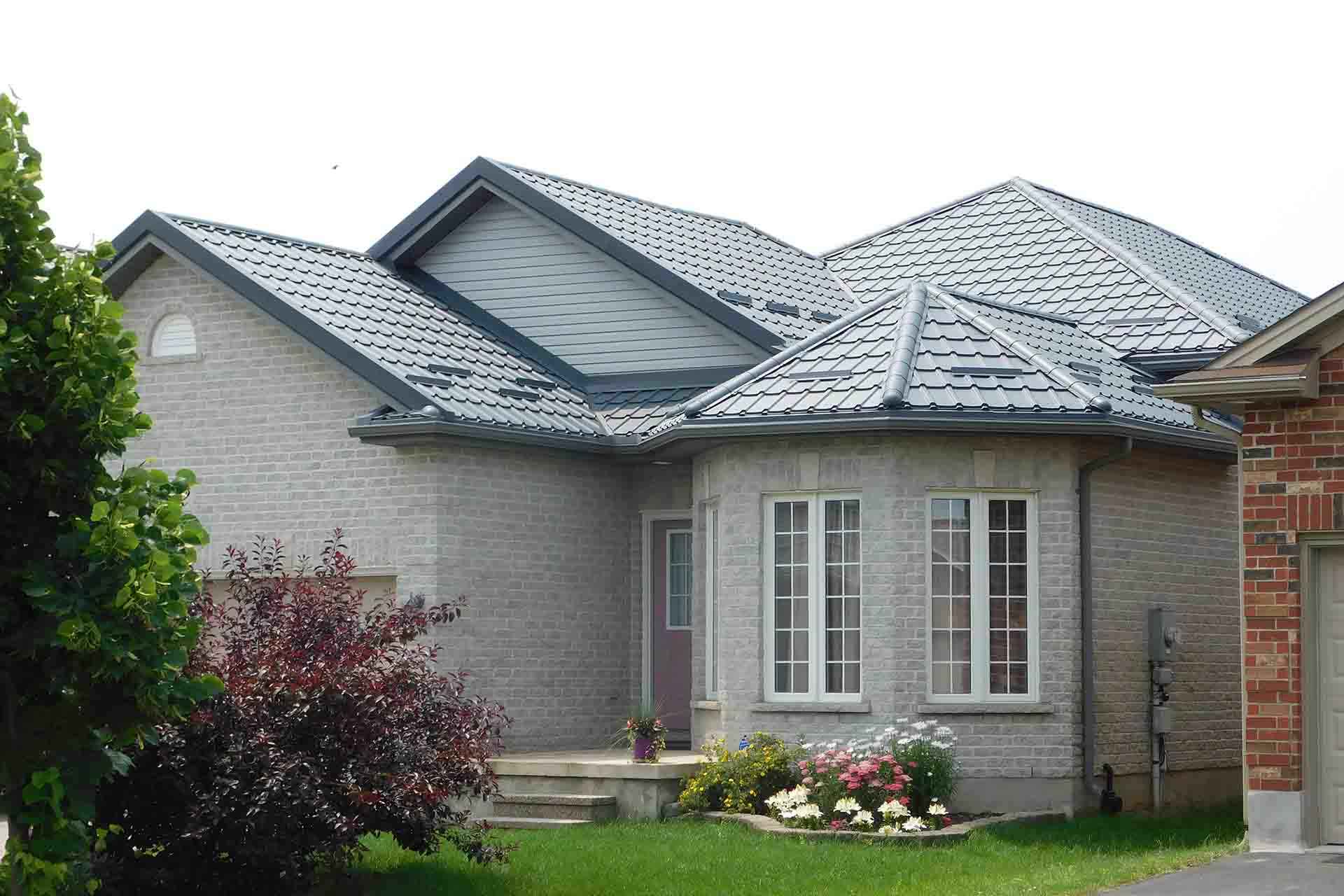
Canadian seasonal shifts subject residential building envelopes to a gruelling endurance test of rapid freeze-thaw cycles, atmospheric pressure drops, and violent summer storms. Among these threats, high-velocity hail and windborne debris pose the most immediate risk to overhead structural integrity, frequently testing the impact resistance of standard cladding and causing traditional, low-grade roofing materials to suffer micro-fractures, granule loss, or complete displacement. These subtle breaches allow moisture to infiltrate internal wall assemblies, saturate high-performance insulation, and trigger widespread wood rot across structural trusses. Without adequate protection, a compromised roof envelope inevitably triggers a downward cascade of damage, destabilizing adjacent building components and driving up long-term repair costs.
Protecting a property requires a proactive, integrated maintenance strategy across all structural and drainage systems. Just as regular catch basin cleaning diverts torrential surface runoff safely away from a concrete foundation, installing high-performance metal roofing ensures that extreme precipitation, ice, and kinetic impact loads are shed cleanly before breaching the primary weather barrier. By keeping your roof impervious to severe weather, you prevent water from cascading down fascia boards, rotting soffits, penetrating siding substrates, or pooling around basement walls. Choosing the right metal roof for your climate establishes an impenetrable shield that preserves structural stability and safeguards the entire building envelope through every extreme weather event.
The Quick Edit
- The Core Problem: High-velocity hail strikes and heavy storm debris fracture standard asphalt shingles, stripping mineral granules and opening direct moisture pathways into the attic space.
- The Engineering Solution: High-tensile steel and aluminum panel profiles absorb and distribute kinetic impact energy across their metallic matrices, preventing punctures, surface cracking, and underlying deck destruction.
- The Strategic Benefit: Investing in impact-tested metal roofing eliminates chronic repair cycles, preserves framing integrity, secures home insurance eligibility, and protects overall property equity for decades.
The Physics of Kinetic Impact: How Metal Disperses Force
To understand why traditional roofing systems fail under severe atmospheric stress, one must examine the fundamental physics of kinetic impact. When a hailstone falls from a thunderstorm cell, it reaches terminal velocity based on its mass and aerodynamics. A two-inch hailstone can hit a residential roof at speeds exceeding 70 miles per hour, delivering concentrated kinetic energy directly onto a microscopic point of the surface material. Brittle asphalt shingles, clay tiles, and cedar shakes lack the structural elasticity required to absorb this rapid energy transfer without permanent damage.
When hit, asphalt shingles experience mineral granule loss, fracturing of the underlying fibreglass mat, and localized displacement of the protective asphalt compound. Clay tiles simply shatter, while slate splits along natural cleavage lines. Once these surface materials fracture, subsequent rainstorms wash water straight through the fissures via gravitational pull and capillary action. The moisture saturates the underlayment, rots the structural plywood decking, and creates an ideal breeding ground for toxic mould within attic spaces.
Metal roofing panels operate on an entirely different mechanical principle governed by metallurgy and structural engineering. Formed from high-tensile steel, zinc, or aluminum alloys, modern panels exhibit exceptional ductile behaviour under dynamic loading. When hit by high-velocity hail, the metallic atomic matrix absorbs the impact energy and spreads the physical stress outward across the entire geometry of the panel rather than concentrating it at the point of contact. This elastic and plastic energy dispersion ensures that metal roofing is ready for severe hailstorms without suffering structural punctures, seam separation, or underlying deck failure.
Testing Standards: Understanding Class 4 Impact Ratings
Metal roofs undergo rigorous standardized laboratory testing to earn top-tier safety certifications that verify their structural resilience. The gold standard for impact performance in North America is Underwriters Laboratories (UL) 2218 testing. During this test, steel balls of varying sizes are dropped from heights up to 20 feet directly onto the roofing material to simulate the kinetic energy of severe hail strikes.
Metal roof assemblies routinely achieve a Class 4 rating—the highest achievable score under UL 2218 guidelines. To pass at this level, the roofing material must show no evidence of cracking, splitting, or rupture on either its weather-facing surface or its underside after repeated direct impacts. Achieving a Class 4 rating confirms that the panel alloy and its protective surface coatings will maintain physical integrity even when subject to intense, repeated storm conditions.
Defending Against Flying Debris and Wind Uplift
Hail is rarely an isolated threat during severe weather events; it is almost always accompanied by gale-force wind gusts, shear winds, and microbursts. These intense wind conditions shear branches off trees, dislodge building fixtures, and propel heavy airborne debris directly against residential structures. Traditional shingles are particularly vulnerable to wind uplift because they rely on exposed edges and temporary adhesive strips. Once wind currents catch the underside of a loose shingle, they can rip entire sections off the roof deck, exposing bare sheathing to driving rain.
Once the primary roofing membrane is torn away, wind-driven rain easily forces its way behind remaining panels through capillary action and pressure differentials. Water that enters at the top ridge line can travel horizontally along internal rafters before dripping onto ceiling drywall, making the original point of entry difficult to trace until widespread damage has already occurred.
Architectural metal roof systems utilize interlocking standing seams, concealed fastening clips, and heavy-gauge panel profiles engineered specifically to resist extreme wind uplift forces. Because the surface is non-porous and continuous from ridge to eave, metal roofs can protect your home against water debris and other types of debris by sliding heavy falling impacts and windborne trash harmlessly off the slope without snagging or lifting.
Substrate Support: The Role of Structural Sheathing
The structural backing beneath the panel is equally vital to its overall impact resistance. Installing metal panels over a solid, stable substrate ensures that proper sheathing provides structural rigidity, backing up the metal panels so they do not flex excessively, oil-can, or dislodge under extreme external loads.
The solid wood deck acts as a continuous anvil beneath the ductile metal skin. This continuous support allows the metal alloy to absorb maximum kinetic impact without suffering structural indentation or deck puncture. Proper sheathing installation also creates a smooth plane that prevents stress concentrations across fastener lines during dynamic loading events.
System Upgrade: Integrating Architectural Standing Seam
Ignoring early warning signs creates a cascading structural hazard across the entire property. A single severe hail storm or high-wind event can turn minor vulnerabilities into total envelope collapse. Upgrading to an engineered metal solution eliminates these recurring failure points entirely.
Homeowners seeking maximum storm protection along with refined curb appeal frequently turn to the elegance of standing seam metal roofing, which combines clean, concealed-fastener lines with industrial-grade storm defense. Because the fasteners are completely protected from the elements within raised interlocking seams, there are no exposed screws or rubber washers to degrade under direct sunlight or loosen during high-impact weather events.
Long-Term Capital Value and Insurance Incentives
Beyond immediate physical protection, switching to an impact-resistant metal roof delivers substantial financial returns over the life cycle of the building asset. Conventional asphalt shingle roofs require replacement or major repairs every 15 to 20 years—a cycle that accelerates significantly in regions prone to severe weather. Every storm that damages conventional materials triggers out-of-pocket deductibles, insurance claim hassles, and rising contractor costs.
In contrast, a Class 4 impact-rated metal roof is engineered as a permanent, 50-plus-year building envelope solution. Because metal panels do not rot, dry out, split, or lose surface granules, their performance remains consistent decades after initial installation. This exceptional durability provides two distinct economic advantages for property owners:
- Reduced Capital Expenditure (CapEx): By eliminating the need for frequent full replacements, the annualized cost of a metal roof is dramatically lower than that of conventional asphalt options.
- Insurance Premium Discounts: Because Class 4 metal roofs significantly reduce the likelihood of costly hail damage claims, major insurance providers frequently offer home policy discounts ranging from 10% to 35% annually for certified installations.
When factoring in energy savings from solar-reflective metal coatings, reduced maintenance fees, insurance rate reductions, and increased resale property value, high-performance metal roofing stands out as one of the most financially sound upgrades available for a residential asset.
The Seasonal Performance Matrix
To maintain peak weather resistance and structural integrity year-round, addressing potential roofing red flags requires strategic attention across key building zones:
In the eaves and valley zones, property owners must clear ice dams and verify that self-adhering underlayment barriers are performing correctly on a bi-annual basis. Ensuring zero water backup during heavy spring snowmelts prevents capillary water draw beneath lower panel seams and eliminates edge deck rot.
Along the panel surface coatings, annual visual inspections verify that Kynar 500 or PVDF paint matrices remain uniform and free of deep scratches from fallen branches. Maintaining coating integrity guarantees complete resistance to atmospheric oxidation, chemical weathering, and UV degradation.
Around perimeter flashing and ventilation seals, seasonal checks (Spring and Fall) ensure that expansion joints, counter-flashings, and ridge seals remain elastic and tightly fitted. Stopping wind-driven rain at vertical intersections keeps moisture out of interior wall cavities and ceiling joists.
Finally, checking the structural deck fastening after major severe weather events ensures that underlying fasteners, clips, and sheathing boards maintain total load resistance against severe wind uplift and dynamic impact forces.
Capital Preservation Through Impact Resilience
A roof is far more than a decorative capping on a house; it is a complex, high-performance engineering system designed to defend your primary investment against harsh, unpredictable atmospheric forces. Continuing to patch and replace vulnerable, short-lifespan materials exposes your internal framing, insulation, and lower-level foundations to chronic moisture degradation and escalating repair costs.
Upgrading to an impact-tested metal roofing system transforms a vulnerable overhead surface into an impenetrable shield that can withstand violent hail strikes, shed flying debris, and resist extreme gale-force winds without compromising the structure. By eliminating chronic maintenance cycles, preventing hidden mould and wood rot, securing valuable insurance discounts, and safeguarding the entire building envelope against extreme Canadian weather, high-performance metal roofing preserves your financial capital and ensures long-term property equity for generations.